Feeds:
Posts
Comments

Posts Tagged ‘Kenya’

After completing a number of field interviews and some competitive analysis for the water filter program, there were a couple of key takeaways that can be applied to the water kiosk initiative.  The most valuable finding is that WaterGuard could be used to dramatically expand the capacity of each kiosk in a very cost-effective manner.  At only .67 shillings per 20 liters purified plus 3 shillings for the water, the kiosk could sell purified water for 5 shillings and still make an acceptable profit.  This assumes of course that at least 30 households in the serviceable area are interested in buying it daily, which I think is achievable with good marketing (says the marketing guy).  In fact, given the density of Kibera, there’s tremendous upside potential if the market interest is high.  The biggest advantage of WaterGuard is the low variable cost.  Unlike adding another filter, doubling or even quadrupling the water purified from WaterGuard is extremely affordable to the kiosk owner.

There are some risks that come with this new product, though I’m not tremendously concerned.  The first is that some people don’t like the taste when WaterGuard is used.  Again, given the density of Kibera and the very attractive price point (especially compared to the risk of contracting typhoid), I think we’ll find enough people who don’ t mind the taste.  For those people who really can’t tolerate it, we will still offer filtered water at the original 10 shilling price.  The extra 5 shillings might seem excessive, but I’m assuming a relatively small number of filtered water sales in the pro forma.

The second concern is that WaterGuard is already available and people could just buy it to purify their own water.  Honestly, I hope some do decide to do that.  We’ll even sell them the bottle.  However, I don’t believe everyone will take us up on the offer.  One might think that in this area of exceptionally high unemployment (or underemployment), there would be no premium placed on the time savings or convenience of having someone else purify the water.  It’s not purely a convenience issue, but people simply view purifying water as an errand they don’t enjoy.  As such, they often just skip it altogether.  With the kiosk model, they don’t have to spend 30 minutes on something they don’t enjoy.  They can just get the clean water directly.

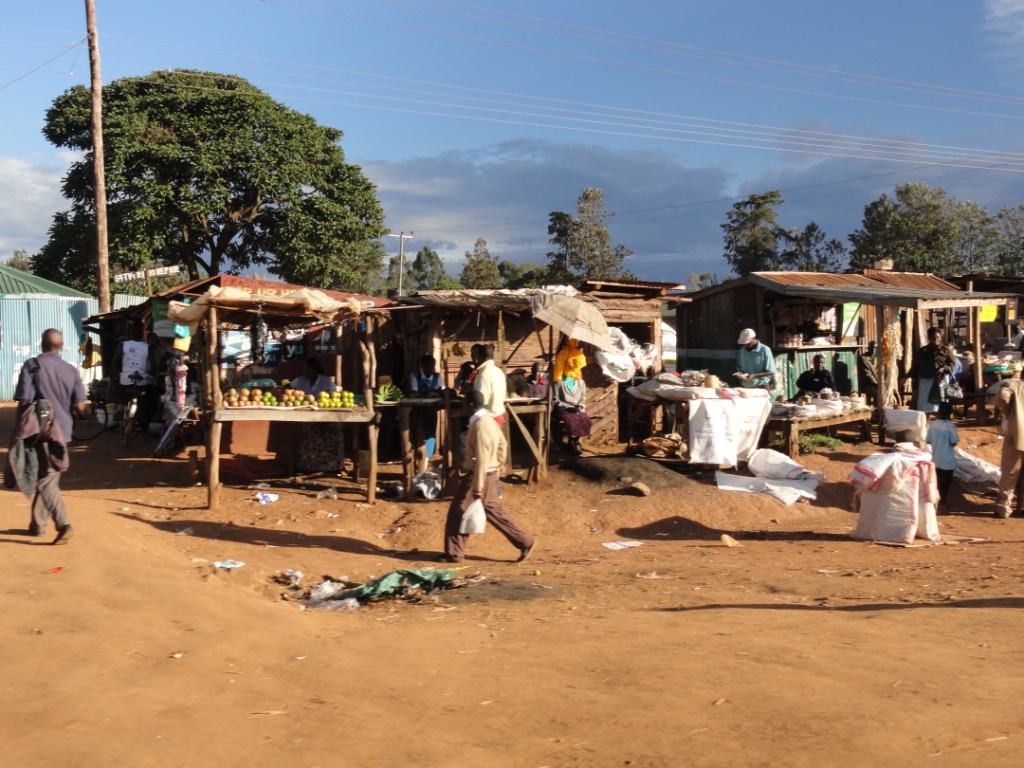
The other key takeaway from spending so much time wandering around the town was how effective the Safaricom / M Pesa (same company) marketing strategy is here.  Kenya is seemingly sponsored by Safaricom.  They’re more ubiquitous than Starbucks in Seattle.  But instead of spending huge sums of money on television commercials, they simply paint their 11,000 agent stands bright green and have easily recognizable signs at every one.  While that might sound obvious, they’re one of the only companies I’ve seen who do that here.
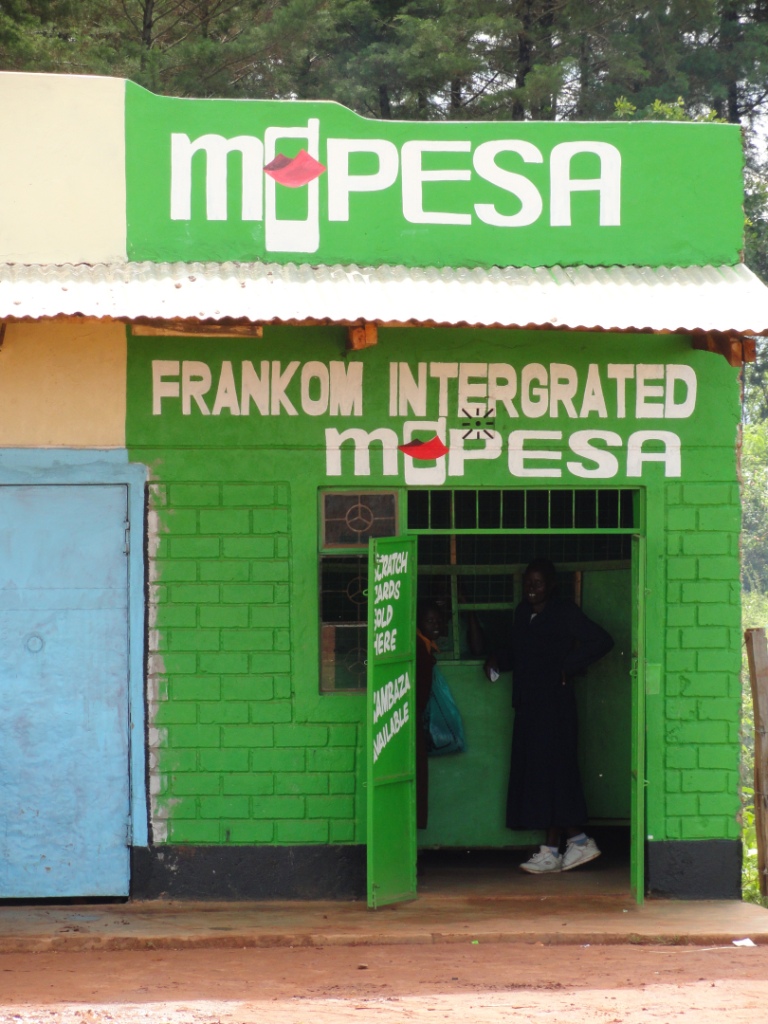
M Pesa Marketing in Kenya

M Pesa Marketing

One of > 11,000 M Pesa Signs

One of > 11,000 M Pesa Signs

I love the idea of replicating this approach for the water kiosks.  It really won’t cost very much money per kiosk, but the cumulative effect will be very powerful.  It compensates for the fact that no individual kiosk owner will earn enough to invest in serious advertising, and the likelihood that they would otherwise pool together funds for marketing is slim to none.

This model also mitigates one of the biggest weaknesses of projects launched by foreign aid groups.  Often a foreign group will come in, do a huge promotional push, and then eventually move on to a new area or project.  Things are going great when they’re there doing the promotion, but as soon as the group leaves, everyone forgets about it and goes back to their old habits.  I think that’s probably one reason why so few people are using WaterGuard here.  Nobody is promoting it.  With the kiosk model, there’s an omnipresent, visible leave behind to keep the service top of mind.

The one negative development is that I’m struggling to find a micro-finance institution that will return my messages.  I’ve been told from a trusted source in the industry that MFIs are constantly flooded with these types of proposals and that the likelihood of them meeting with me is low.  I have two potential solutions to this problem, so hopefully at least one of them will work.

Overall, I’m still very excited about the potential for the water kiosks to seriously broaden access to clean water in the slums as well as other areas in Kenya.  I will continue to write updates as new developments arise.  I’ll keep asking for your comments, despite the fact that I receive very few.  I’d love to hear your thoughts and suggestions.
Read Full Post »

I’ll return to writing about my work shortly, but I’ve enjoyed reading blogs from other international volunteers over the weekend and wanted to share one I found particularly inspiring.  Here is a short excerpt, and I’ll link to the full post below.  As I read it, I couldn’t help but re-think my time in Kibera and in the villages outside Kiminini and agree with Taylor.  Despite their rough conditions, the people here take comfort in what they do have, and are happy simply enjoying the company of their friends and family.  I know I could personally stand to remember this more when I return home.  I hope you enjoy this as much as I did.

“I used to talk to people on the ground all the time.  I would ask them – what is poverty to you, and what is wealth?  You see you could have a house with a cement floor and hardly a roof.  You and your family eat rice and beans on the hard floor, maybe not even swept.  And someone sees that and thinks – my, you have a house!  And that is something, and you are rich.”

“Poverty is relative,” I nod.

“It is, indeed.  Not just relative to others who have more or less than you, but relative to your expectations.  It’s a question of vision.  When you look at your life and it doesn’t look like your vision, it’s then that you feel poor.”

http://fellowsblog.kiva.org/2010/04/30/microfinance-skeptics-rethink-your-vision-of-success/

Read Full Post »

I came across the blog post of a new Kiva Fellow, James Allman-Gulino, who recently came to Uganda to work in micro-finance.  James points out that the public infrastructure in Uganda is so poor that perhaps big picture issues like proper roads and health care must be addressed before tools like micro-finance can truly work to alleviate global poverty.  I’d add education to that list as well.

I’ve had this conversation a few times recently and it ultimately comes back to the same broader problem.  I’m no expert on African politics, but my understanding of the situation is that taxes on the wealthy are not always collected and distributed properly (to put it very mildly).  This leads to schools that must be funded largely through private tuition, which easily costs $800 USD per student per year at the high school level (this may include room & board plus supplies).  For a typical rural family earning less than $1,000 USD per year, it makes sending the children to high school and beyond exceptionally difficult if not impossible.  The result of this is a massive population that is not adequately educated in topics like health, science, math, and business.  It’s therefore not surprising to hear people in the villages tell me that they know their water is clean because they don’t see any worms in it, or that they didn’t do the analysis to realize that there are cheaper alternatives to boiling water or risking typhoid.  It’s also not surprising that many people don’t have the skills to grow their small businesses or develop products and technologies they can sell to wealthier nations to grow their national economy.

The other problem with the lack of tax dollars going towards infrastructure projects is that it blocks the creation of tens of thousands of jobs nationwide.  How many people does the American government directly or indirectly employ through public works projects?  Those payroll dollars then circulate throughout the broader US market, enabling economic growth and a relatively good standard of living.  Of course there are the other benefits of more efficient distribution of good and services that lower costs and increase the serviceable market of businesses.

Typical village businesses

Typical village businesses

Typical Village Road

Typical Village Road

Sadly, I don’t have a solution to this problem.  Shy of the African governments and upper class deciding that they’re ready to make large personal sacrifices to help their countrymen or organizations like the Gates Foundation building thousands of schools and funding them for several generations, I’m not sure how this core problem gets corrected.

I think the international development organizations are commendable in doing what they can to try to alleviate poverty and suffering.  I believe that they do make a real difference in people’s lives, though they may never fully eradicate social injustice.  That said, I do believe their is room for improvement in the non-profit sector in terms of working together to achieve economies of scale.  I wonder how many different small organizations are working in Africa right now to improve access to water, education, health care, and financial opportunity.  I also wonder how much more effective we might be if we formed stronger partnerships.  Why should a hundred groups spend a small amount to each educate a few hundred people on clean water when we could pool our funds and launch a massive campaign that would reach a whole region?  If I spend money building a water kiosk to promote clean water, why should someone else spend the same money building a stand down the road selling mosquito nets?  Couldn’t we just build two stands that sell both, enabling us both to double the reach of our program?  It’s certainly sometime I’ll be thinking about as I proceed with my project.

Sorry for such a long and preachy post.  I’ll try to stay more upbeat in the coming week.  In the meantime, I very much welcome your thoughts on this or any related topic.  If you want to check out the Kiva blog, the link is below.

http://fellowsblog.kiva.org/2010/05/09/new-models-for-kiva/

Read Full Post »

As promised, I thought I’d take the weekend to upload my backlog of photos.  I’ve been privileged to meet some wonderful Kenyans and volunteers since I’ve been here.  I’ve also enjoyed all the animals that wander around the streets or come to visit me in my hut.  I’ve posted well over 30 pictures in Flickr (link to the right), but here are a few of my favorites.  I’ll continue to upload pictures and posts every day or two, so don’t forget to check back regularly.

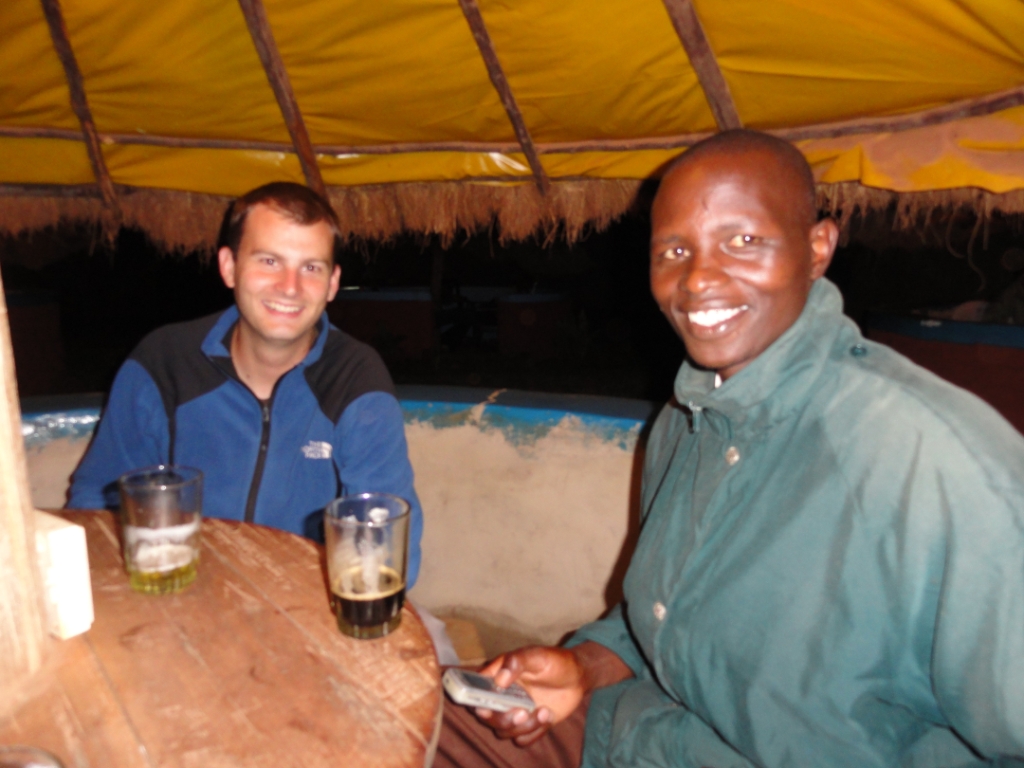
Alastair and Steve

Alastair (KCP Volunteer) and Steve (Kenyan college student)

Paka Mweosi

Paka Mweosi - my adopted pet (Black Cat in Kiswahili - clever, huh?)

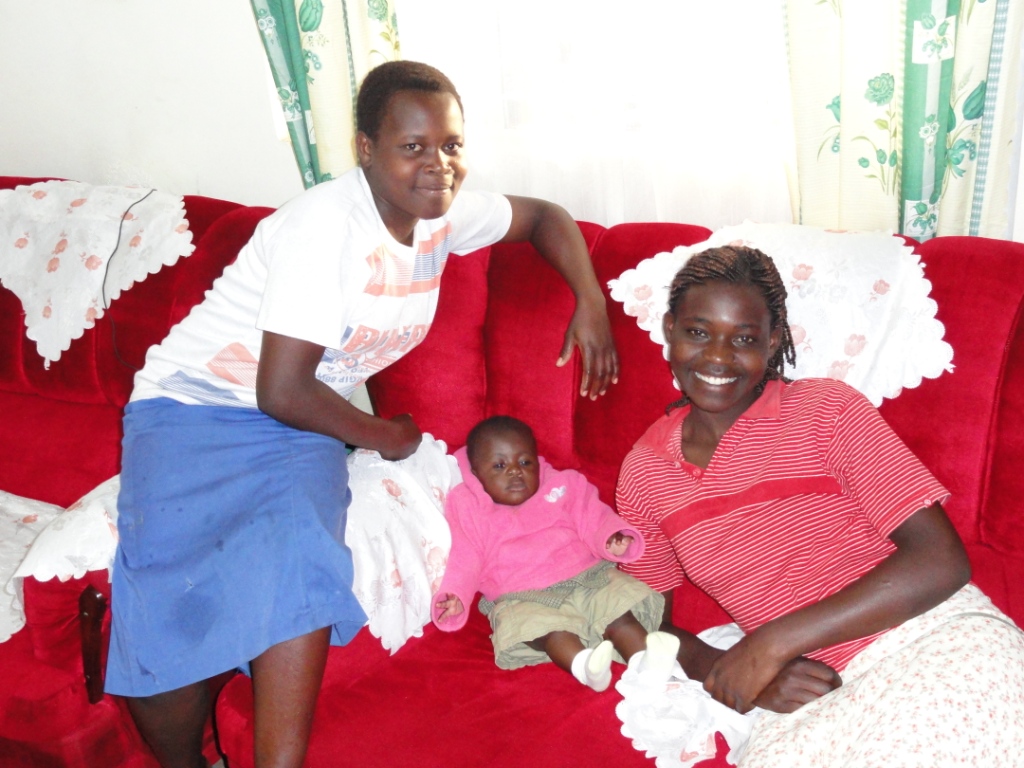
The gang

Josie, Esta, and Emmanuel - Friends and Kiswahili tudor

Kenyan baby sheep

Random baby sheep on the side of the road

Kiki and Caleb

Kiki and Caleb - Kids in the extended family

House guests

House guests

Read Full Post »

I mentioned in yesterday’s post that you really need to dig to uncover the truth in the field interviews. There’s a powerful combination of people wanted to give the “right” answer, people assuming the Mzungu knows best, and people thinking that maybe they’ll get something for free if they express interest. Today I had a bizarre conversation with a woman who knew we were from the water filter plant that basically went like this:

Do you treat your water today?
– No. Nobody is sick and the water is clean
Are you familiar with WaterGuard? Have you ever tried it?
– No . There’s no need. The water is safe.
So would you be interested in purchasing a 1,500 shilling water filter?
– Yes, I would very much like to purchase a filter
Why? You said the water is clean and no one is sick.
– I’d want it as a precaution. The water would be safer if I purify it.
In that case, why don’t you use WaterGuard as a precaution today?
– I don’t know. How much does it cost?
20 shillings treats your water for a month
– Wow, very exciting! I didn’t realize that.
So will you start using WaterGuard tomorrow as a precaution since the filters aren’t ready?
– Silence.

Actions speak much louder than words. Even with these challenges, I’m still learning quite a bit from these interviews. I’ll have another post plus a bunch of pictures over the weekend, so be sure to check in.

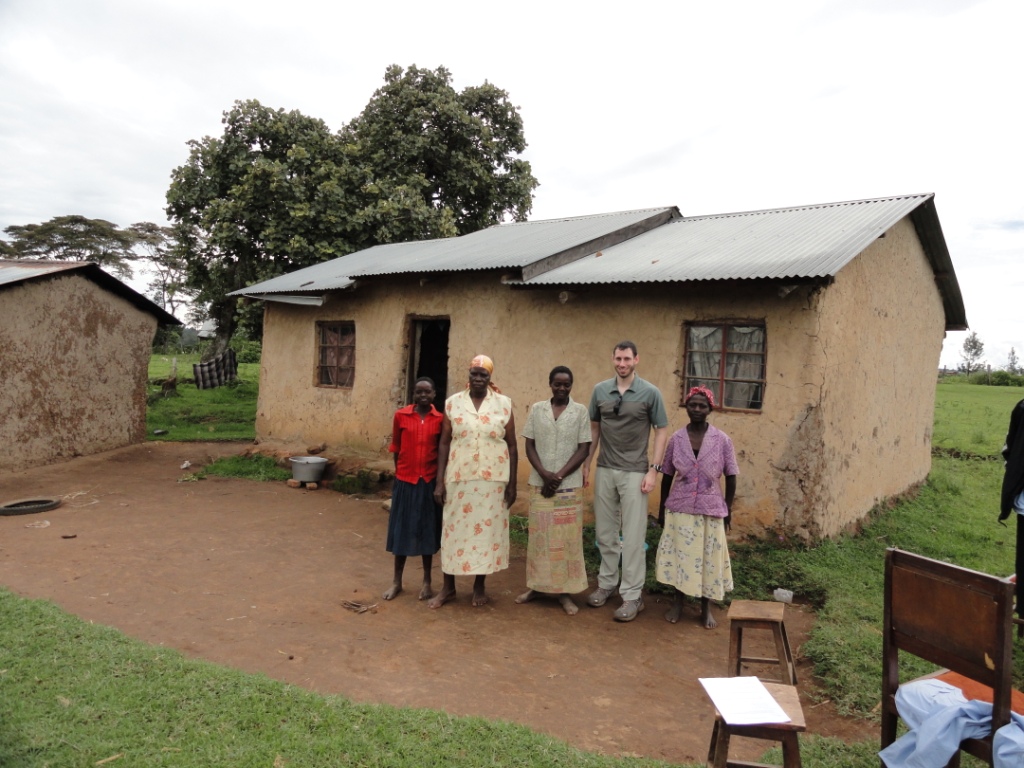
Kenya Village Interviews

Kenya Village Interviews

Read Full Post »

After a second day in the village of Mbai, I’m starting to see some trends related to the four key research questions.  Of course this is just one village, so we’ll conduct interviews in other villages as well as the urban areas around Kitale over the next week to further validate the findings or see how answers differ in other regions.  I won’t mention every key finding here, but I’ll list some of the highlights.

1. Develop an understanding of the needs/demands of the community regarding drinking water

  • Every household we interviewed gets their water from a public source like a stream or a well.  Nearly everyone recognizes the need to purify water, often because they were told to by a doctor after contracting typhoid.
  • The overwhelming  common theme throughout each interview was price.  When people didn’t purify, it was often because they felt it was too expensive.  When people did purify, they complained that it was too expensive and said they would be very interested in anything that reduced the price.  Interestingly, there are commercial products like chlorine solutions that are far cheaper than the most common method of boiling, but many people didn’t actively search out these lower cost alternatives despite their desire to cut costs.  For the filters to be sold effectively, we’ll need adequate promotion to make people aware of the benefits like long-term cost effectiveness.

2. Determine competition / alternatives to water filters and their pros and cons

  • There are three clear alternatives in this village; boiling, using chlorine (WaterGuard), and drinking contaminated water.
  • Boiling is the most common method, and also seems to make the least amount of sense.  It takes up to 30 minutes to boil and then cool the water.  It’s the most expensive option if you don’t have wood on your property and have to buy firewood as many do.  It’s also bad for the environment, though I don’t think that’s a factor for most people.  However, it’s simply the most familiar to people and it’s easy to understand.  While it’s not cheap (20 shillings worth of firewood can boil 20 liters of water), it’s certainly an amount most people can raise every day.  There are also no side effects in terms of bad taste or the fear of unknown chemicals.
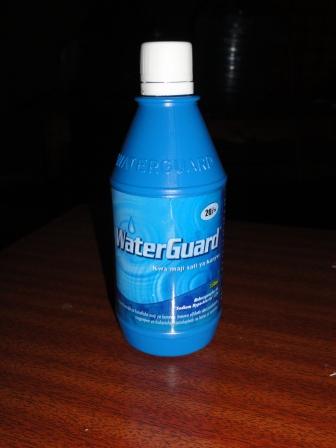
  • WaterGuard water purification solution

    WaterGuard water purification solution

WaterGuard is a chlorine solution that some people use.  It’s extremely cheap, with a 20 shilling bottle supposedly purifying 600 liters of water.  The main problem with WaterGuard is that people don’t know about it or assume it’s expensive.  Many people looked shocked (in a good way) when I told them about WaterGuard.  Another problem is that you have to let the water sit for 30 minutes after you add the chlorine.  Most people here don’t have watches and some don’t wait the full 30 minutes.  Lastly, some people say it gives water a bad taste and smell.  I bought a bottle, and plan to test it out this weekend.

  • Of course drinking contaminated water is both fast and free, right up until you contract typhoid.  Then it costs upwards of 3,000 shillings for treatment plus lost wages while you’re recovering.

3. Determine a price people will be willing to pay for a filter

  • The key finding here was the overwhelming request for the ability to purchase the filter in installments.  Most realized that even at 1,500 shillings, the filter was cheaper than firewood over a long period of time, but they didn’t have that kind of money to pay up front.  Having flexible terms was important, as some wanted to pay 500 shillings over 3 months while others wanted to pay 100 shillings over 15 months.  One person said he’d prefer to just make payments whenever he had money available.

4. Determine viable distribution channels for filters

  • The first common theme that emerged here was that they wanted to buy the filter from someone they knew, especially if they were buying it in installments.  Nearly everyone went to the market in Kiminini once per week and knew many of the vendors.  They said that would be far better than buying it at a large store where they didn’t have a personal connection with the staff.
  • The second request, consistent with the first point, was to sell them close to where they live.  Public transportation is not great here, and traveling a long distance with a fragile filter would not be ideal.
  • This topic in particular will be interesting to compare across geographic regions.

I’ll write another post and put up more pictures over the weekend, so be sure to check back soon.  I’ll also try to get in a fun, non-work related post with pictures if possible.  In the meantime, enjoy some new pictures below and on Flickr.

Kenya field interviews

Kenya field interviews

Kenya Village Pictures

Kenya Village Pictures

Read Full Post »

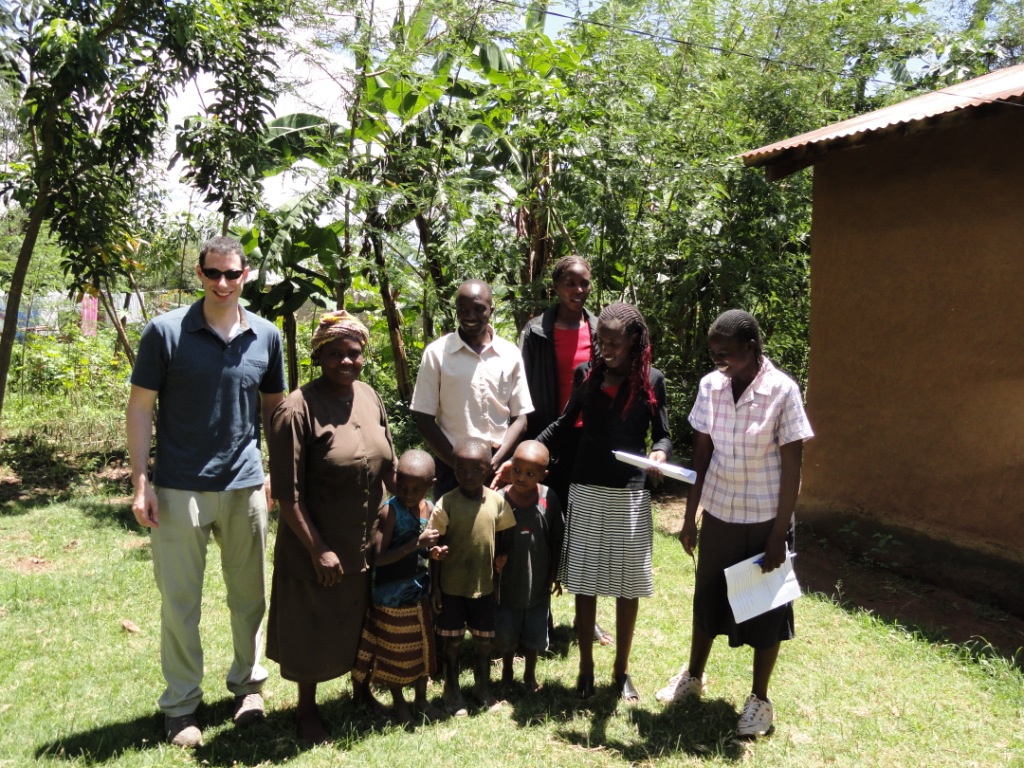
Day 1 of the field interviews is now complete and after 6 interviews, there were some interesting findings.  One issue that I somewhat expected, but not to the extent I saw it, was the tendency for people to tell me what I wanted to hear instead of what’s really happening.  There were numerous instances where people would contradict themselves during the interview.  When I questioned them on the inconsistencies, I would often find the truth to be very different from what they first told me.  Here are a few examples.

  • One woman told me that she used to use WaterGuard, a chlorine solution, but stopped because it was too expensive.  When I asked how much it cost, she said she didn’t know.  She eventually told me that her daughter used to buy WaterGuard, but since her daughter moved to a different town, she really just never thought about buying it herself.
  • Another woman told me that she usually boils water, but occasionally uses chlorine tablets.  When asked about the price, she said firewood for boiling 20 liters of water costs 20 shillings.  Chlorine cost 40 shillings for a 20 pack of tablets, each good for purifying 20 liters of water.  I asked why she didn’t use the chlorine tablets more often, and she said they were too expensive.  When I pointed out that per 20 liters of water, tablets were 10x cheaper, she then said that she actually doesn’t buy firewood, but rather goes on long walks to collect it from the ground.
  • Every person told me they believe their drinking water source is not clean and would pay up to 1,500 for a water filter.  Several said they have gotten typhoid, which cost 2,000 – 3,000 shillings to treat.  Yet many of these same people said they don’t currently purify their water because it’s too expensive.

Fortunately, there were some valuable findings.  Please note that all 6 of the women interviewed were from the same village, in the same widow’s club.  They were also on the more extreme end of the poverty scale.  Over the next several days we’ll interview people from other areas to get a more representative sample.

  • Nearly every woman said they would be extremely interested in buying the filter in installments.  Most know the vendors in the local Kiminini market, and would feel comfortable paying anywhere from 100 – 500 shillings per month for 3-10 months until they’ve saved enough to take home a filter.  They would not feel comfortable paying in installments with a vendor they did not know, and all but one said they would have no interest in the filter if they had to pay for it in full.
  • In this group, most preferred to buy the filter as opposed to the water kiosk model because it’s ultimately cheaper.  Some were also afraid there would be days they didn’t have the 5-10 shillings to purchase water, or that they might forget to buy the clean water.  Many did say that if that they preferred the water kiosk model to their current behaviors of boiling or drinking unfiltered water, but buying the filter in installments would be their first choice.
  • Their financial situations are dramatically improved during the harvest season (Sept – Dec).  That is when most of them make any big purchases.  If we are going to spend resources promoting the water filters, it likely makes sense to do it around September or October.  Many said that even if the filters were ready now and they wanted to buy them, they simply couldn’t at this time due to lack of funds.
Kenya Village Interviews

Kenya Village Interviews

It will be very interesting to see how answers differ as we meet with people from different areas and slightly higher incomes.  I will post updates in the next day or two.

Also, be sure to check out several new pictures on Flickr.  I have pictures of the village and of the market in Kiminini.  Pictures of the water filter factory will be up soon.

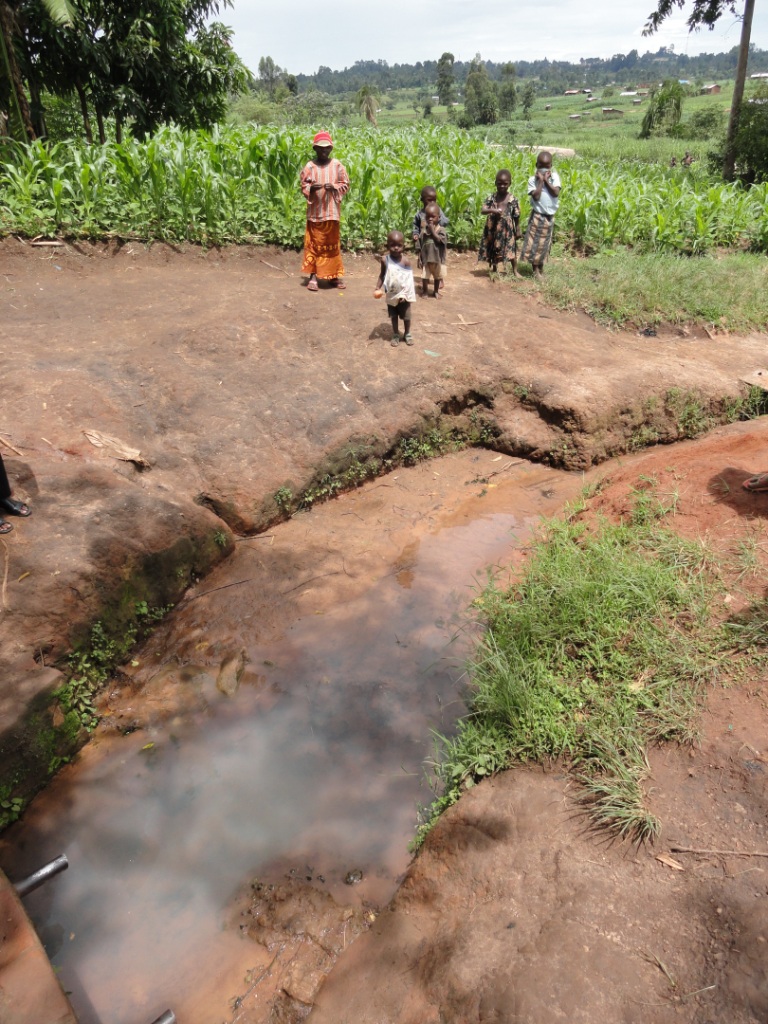
Stream for drinking water

Stream for drinking water

Read Full Post »

This week I’ll be kicking off a very exciting market research project.  Working with a team of four Kenyan university students, we’ll conduct a series of focus groups and in-home interviews.  I’ve developed a 36 question survey to gather information on four critical research objectives:

  1. Develop an understanding of the needs/demands of the community regarding drinking water
  2. Determine competition / alternatives to water filters and their pros and cons
  3. Determine a price people will be willing to pay for a filter
  4. Determine viable distribution channels for filters

I’ll be posting interesting insights from these interviews over the next few weeks, so stay tuned.  If anyone is interested in seeing a copy of the questionnaire, just let me know via e-mail or a by posting a comment and I’ll send it over.

Read Full Post »

I thought I’d take a break from the serious stuff and share some random observations I’ve found interesting as well as some pictures of where I’m staying.  Keep in mind that these observations are based on my very limited time here so far.  If any Kenyans find mistakes in what I’ve written, please let me know.

  • I’ve been told that if someone gets caught stealing, the thief tries to run to the police station for safety.  If he’s caught by the people in the community, the consequences are far more dire.
  • Caucasians are called Mzungus.  Interestingly, some people I spoke with said Barack Obama is a Mzungu because he has “light skin” and talks like an American.
  • In Kiswahili, the primary language in Kenya, many words or phrases are different if you’re speaking about a living thing versus an inanimate object.  For example, “where is ____” is different if you’re asking where a person is versus a table.  There is no distinction based on the “gender” of the word like in many languages.
  • You don’t subscribe to a monthly/annual phone or internet plan here.  Most people prepay for minutes.  There are little shops everywhere that sell cards in many different amounts.  You can go by 30 minutes of cell phone service, text the code to the phone company, and off you go.  It’s actually a pretty efficient system.
  • Kenyans, especially less wealthy ones, by and large deal with expense management on a very short-term basis.  The same person drove me around in Nairobi for a few days and filled up the car with a couple gallons of gas ever day instead of just filling up for the week.  Similarly, I haven’t seen anyone buy more than a week’s worth of cell phone minutes.
  • There are very few leisure activities other than sitting with family and friends and talking.  Other than the lack of rock climbing gyms, it’s not too bad.  There is television, but it doesn’t seem to be a cornerstone of leisure activity like in the US.

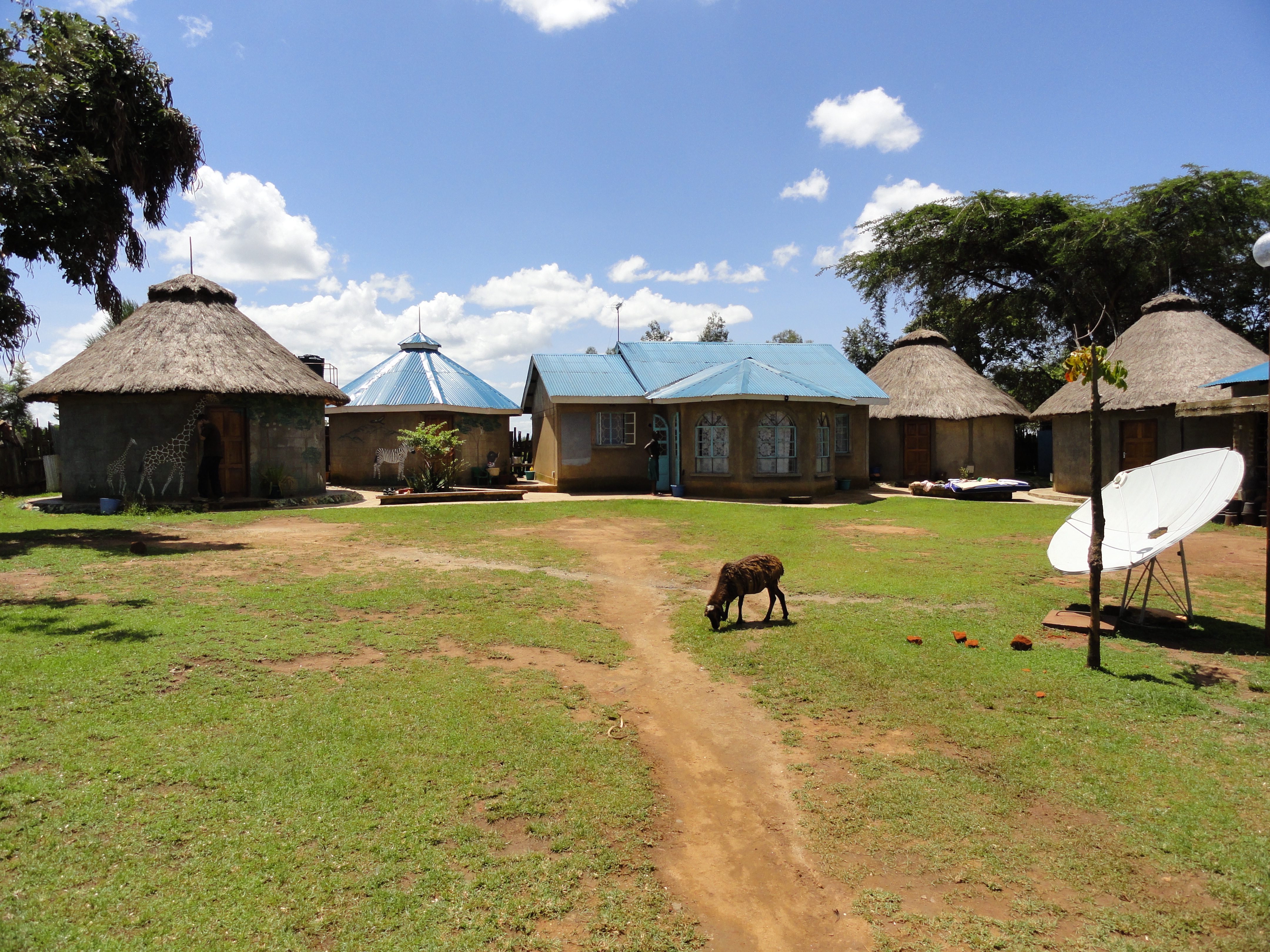
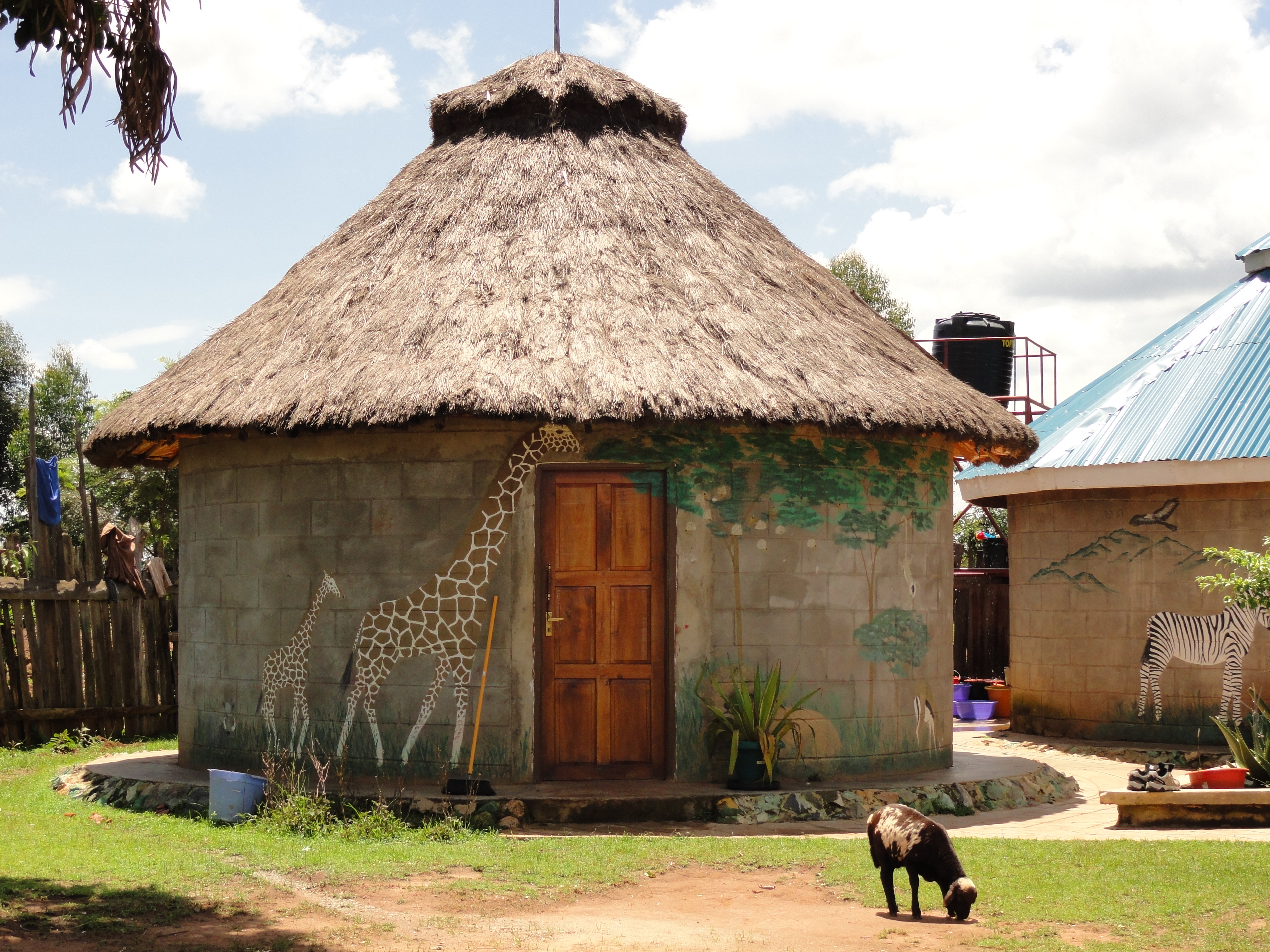
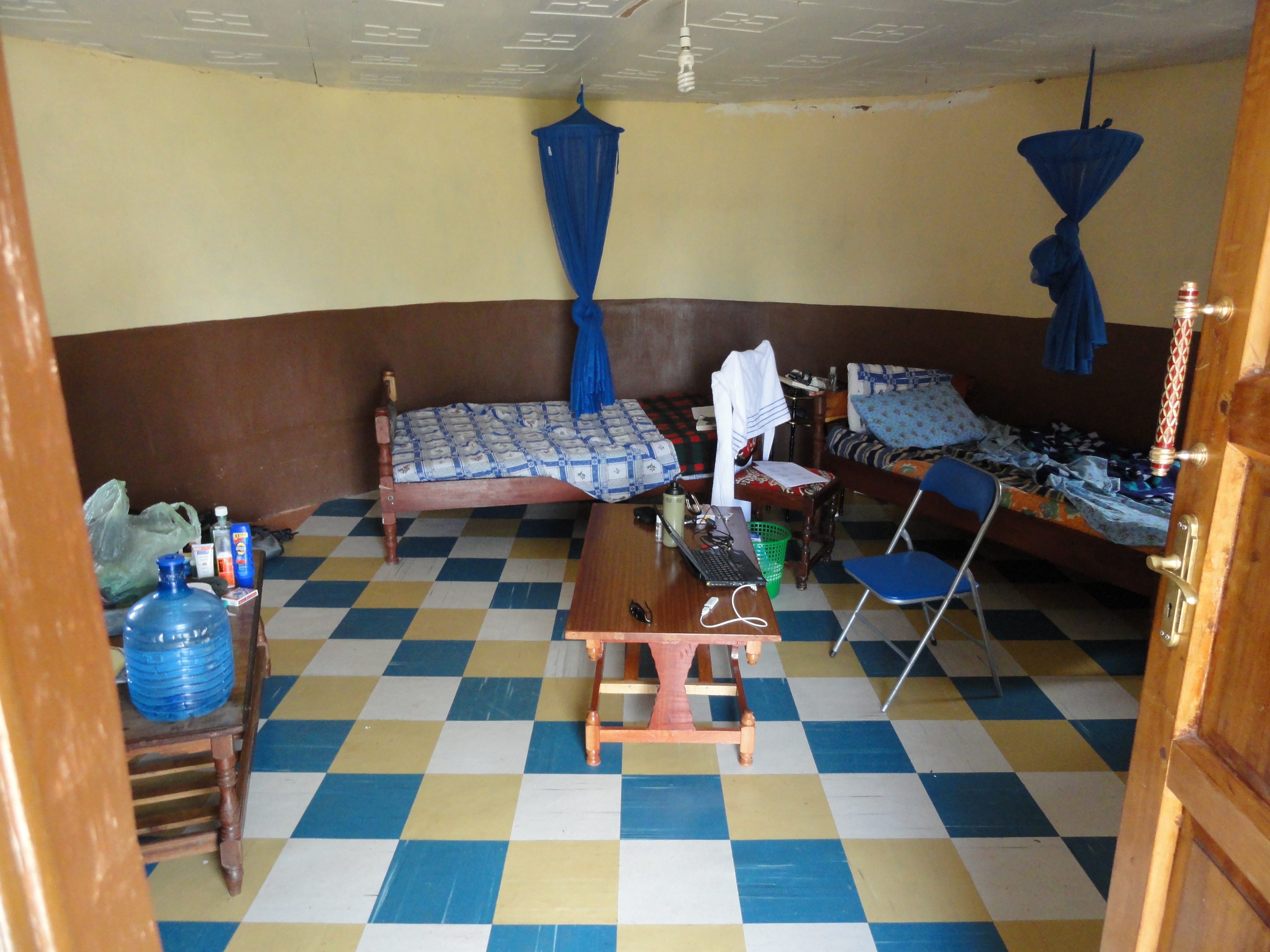
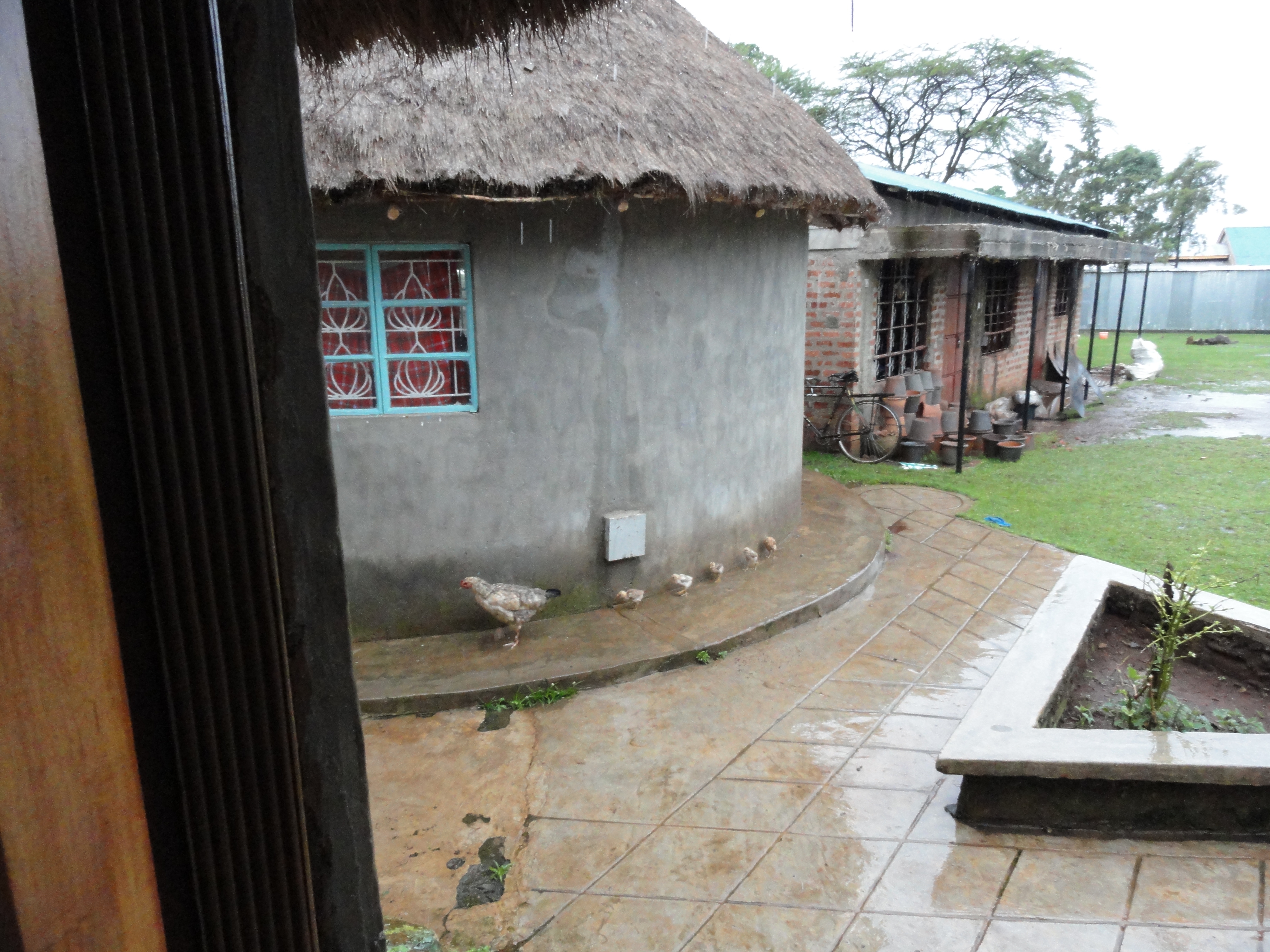
Here are some pictures of where I’m staying.  There will be more on Flickr later today.

Common Ground for Africa

Common Ground for Africa

.

Guest Hut

Guest Hut

.

Inside my guest hut

Inside my guest hut

.

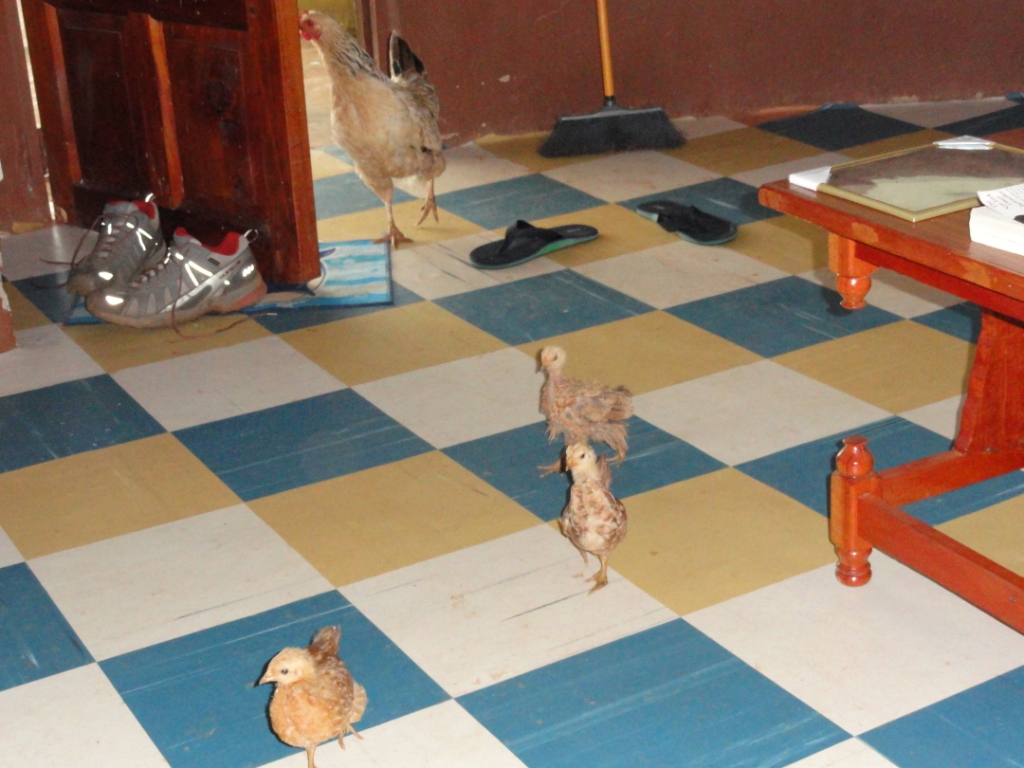
Chickens taking cover in the rain

Chickens taking cover in the rain

Read Full Post »

In my post a few days ago about the Kibera slums, I mentioned that I spoke with some locals about how they could use our water filters to improve their water quality.  I’d like to share the details about this initiative, which I believe will work in other areas of Africa as well.

Like many commercial products, I believe we have the greatest chance of success both in terms of reaching a high number of people and achieving financial sustainability if we leverage multiple sales channels to distribute our product.  Three of these channels are selling to organizations like other non-profits and hospitals, selling to stores that will resell them, and selling directly to households.  All of these are valid and worthwhile channels that we’ll pursue.  However, they all share one major drawback, which is that a household will have to pay for the filter up front.  The price hasn’t been determined yet, but this could cost roughly $15 which is a substantial amount to many households in the poorest parts of the world.  One potential solution to this problem that we’re evaluating is to establish a credit program, but that may be difficult to administer and may not be feasible for the poorest households.  That leads me to the initiative that I’m very excited about.

The water kiosk initiative would allow people to obtain a micro-finance loan of approximately $200 and purchase roughly 10 filters plus other supplies.  They would then purchase contaminated water from the public taps at roughly 4 cents per 20 liters, filter the water, and resell the clean water for roughly 10 cents per 20 liters.  Water can be easily recontaminated if stored in a dirty container, so they may need to purchase and clean old containers for roughly $1 and then sell them at cost.  Ideally they’d slap a label on the containers for improved branding and visibility in the community.  These kiosks could also sell filters directly to those households who can afford one.

The concept behind this channel is that many households in low income areas generally manage their revenues and expenses on a day by day basis, spending money primarily on what they need right now.  They will often choose to pay a small premium in order to have more manageable payments, much like Americans do with car loans and mortgages.  The other piece of inspiration for this idea came from a Harvard Business Review article from 1960 called Marketing Myopia (several of you have likely heard me talk about this article at some point).  The article basically urges businesses to broaden the way they define themselves.  In our case it would be easy to think we’re selling water filters, but in a broader context we’re selling better health through clean water.

The other thing that’s exciting about this sales channel is that it creates jobs, which are sorely needed.  I’m hoping to partner with a Kenyan micro-finance institution to fund a handful of loans as part of a pilot program to verify the economic viability and health improvements of this model.

I look forward to sharing additional details about this program over time.  Meanwhile, if you have any suggestions or questions about the initiative, please feel free to post a comment.  Thanks.

Read Full Post »

« Newer Posts - Older Posts »