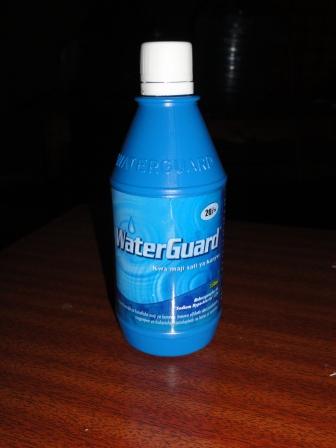
After completing a number of field interviews and some competitive analysis for the water filter program, there were a couple of key takeaways that can be applied to the water kiosk initiative. The most valuable finding is that WaterGuard could be used to dramatically expand the capacity of each kiosk in a very cost-effective manner. At only .67 shillings per 20 liters purified plus 3 shillings for the water, the kiosk could sell purified water for 5 shillings and still make an acceptable profit. This assumes of course that at least 30 households in the serviceable area are interested in buying it daily, which I think is achievable with good marketing (says the marketing guy). In fact, given the density of Kibera, there’s tremendous upside potential if the market interest is high. The biggest advantage of WaterGuard is the low variable cost. Unlike adding another filter, doubling or even quadrupling the water purified from WaterGuard is extremely affordable to the kiosk owner.
There are some risks that come with this new product, though I’m not tremendously concerned. The first is that some people don’t like the taste when WaterGuard is used. Again, given the density of Kibera and the very attractive price point (especially compared to the risk of contracting typhoid), I think we’ll find enough people who don’ t mind the taste. For those people who really can’t tolerate it, we will still offer filtered water at the original 10 shilling price. The extra 5 shillings might seem excessive, but I’m assuming a relatively small number of filtered water sales in the pro forma.
The second concern is that WaterGuard is already available and people could just buy it to purify their own water. Honestly, I hope some do decide to do that. We’ll even sell them the bottle. However, I don’t believe everyone will take us up on the offer. One might think that in this area of exceptionally high unemployment (or underemployment), there would be no premium placed on the time savings or convenience of having someone else purify the water. It’s not purely a convenience issue, but people simply view purifying water as an errand they don’t enjoy. As such, they often just skip it altogether. With the kiosk model, they don’t have to spend 30 minutes on something they don’t enjoy. They can just get the clean water directly.
The other key takeaway from spending so much time wandering around the town was how effective the Safaricom / M Pesa (same company) marketing strategy is here. Kenya is seemingly sponsored by Safaricom. They’re more ubiquitous than Starbucks in Seattle. But instead of spending huge sums of money on television commercials, they simply paint their 11,000 agent stands bright green and have easily recognizable signs at every one. While that might sound obvious, they’re one of the only companies I’ve seen who do that here.
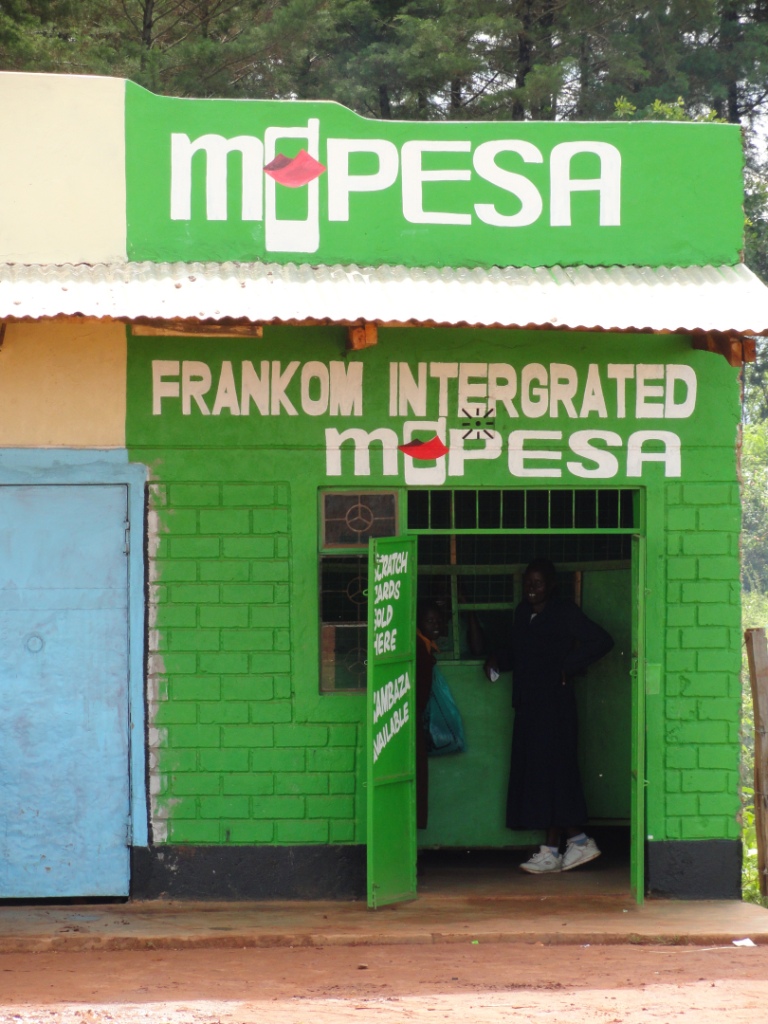
M Pesa Marketing

One of > 11,000 M Pesa Signs
I love the idea of replicating this approach for the water kiosks. It really won’t cost very much money per kiosk, but the cumulative effect will be very powerful. It compensates for the fact that no individual kiosk owner will earn enough to invest in serious advertising, and the likelihood that they would otherwise pool together funds for marketing is slim to none.
This model also mitigates one of the biggest weaknesses of projects launched by foreign aid groups. Often a foreign group will come in, do a huge promotional push, and then eventually move on to a new area or project. Things are going great when they’re there doing the promotion, but as soon as the group leaves, everyone forgets about it and goes back to their old habits. I think that’s probably one reason why so few people are using WaterGuard here. Nobody is promoting it. With the kiosk model, there’s an omnipresent, visible leave behind to keep the service top of mind.
The one negative development is that I’m struggling to find a micro-finance institution that will return my messages. I’ve been told from a trusted source in the industry that MFIs are constantly flooded with these types of proposals and that the likelihood of them meeting with me is low. I have two potential solutions to this problem, so hopefully at least one of them will work.
Overall, I’m still very excited about the potential for the water kiosks to seriously broaden access to clean water in the slums as well as other areas in Kenya. I will continue to write updates as new developments arise. I’ll keep asking for your comments, despite the fact that I receive very few. I’d love to hear your thoughts and suggestions.




 Clean Water For All