Feeds:
Posts
Comments

Posts Tagged ‘Kenya’

After a fun day at the elephant orphanage yesterday (pictures on Flickr), today was the kick off to the real reason I came to Africa.  I had the opportunity to take a 4 hour private tour of the largest slum in East Africa with two men who were born and raised there.  While I have pictures of Kibera, they simply cannot deliver an accurate assessment of this massive community.
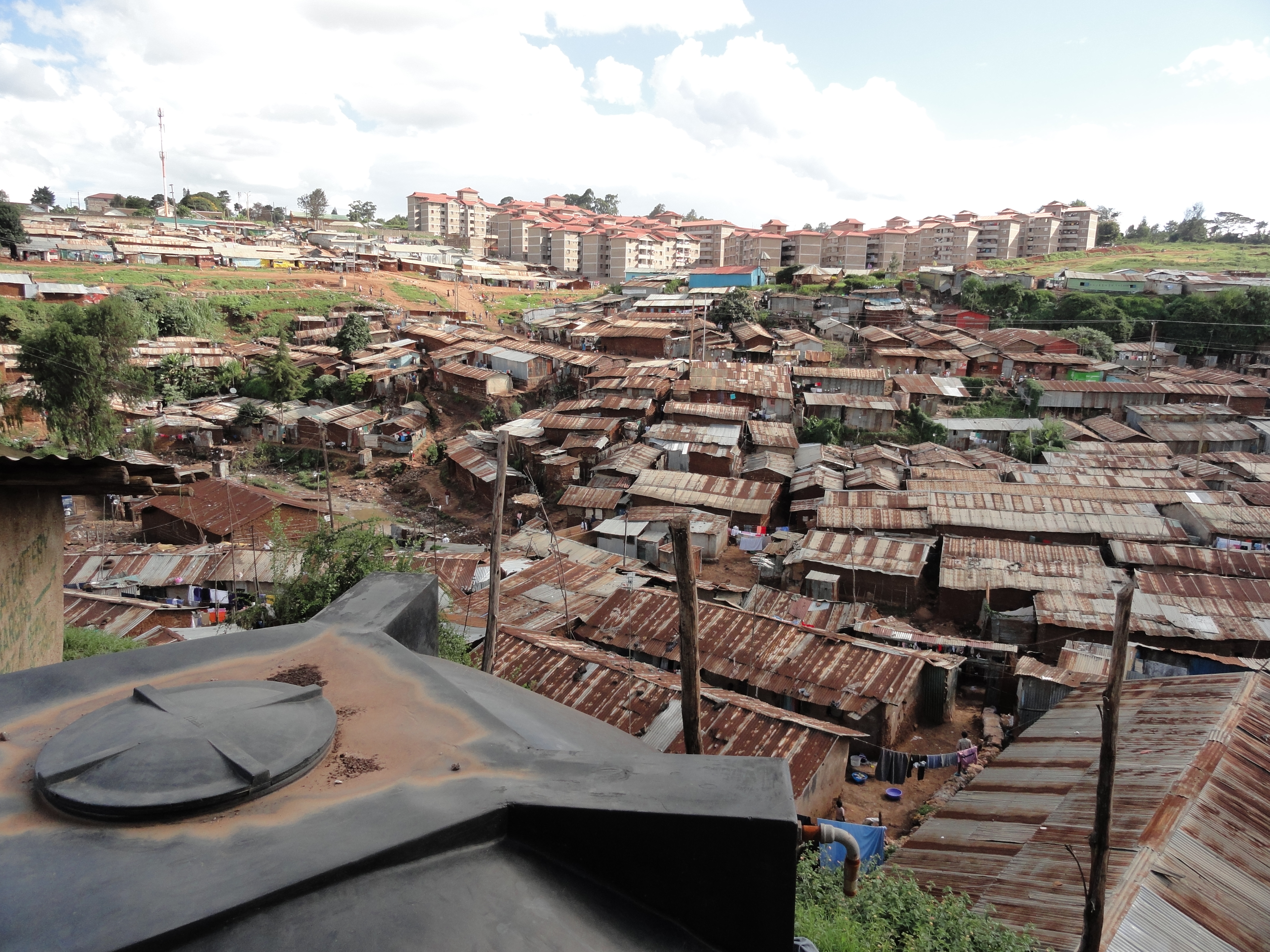
Kibera Slums

Kibera Slums

First of all, let’s just say that the lack of proper sanitation is extremely apparent to all senses as you walk through the streets.  Second, the sheer size of the area isn’t adequately portrayed in a photo.  Finally, from the high level pictures, you miss the most intense element – the people.  There are just so many people, thousands upon thousands out in the streets.  Most people not only live here, but operate tiny shops out of their homes.  There are children everywhere.  The most incredible thing is that while I wouldn’t last a week there and you generally equate extreme poverty with extreme crime and despair, most people are high spirited and exceptionally friendly.  I can’t even count how many random strangers came up to shake my hand or welcome me to their community.

During my tour, the guides and I discussed numerous topics including water cleanliness (obviously), financial services constraints, population control, education, public housing, and more.  While there are numerous areas for improvement (which may be the understatement of the year), the locals told me that they considered sanitation and water to be the most pressing issues.  I can completely understand why sanitation ranked #1, as a handful of pit latrines are shared by thousands of people and overflow, forcing people to resort to a far less desirable option when relieving themselves.  Water obtained from the public (though not free) tap is unclean and stored in dirty jugs, when available at all.  Due to these conditions plus the density and openness of the slums, disease spreads like wildfire throughout the slum.
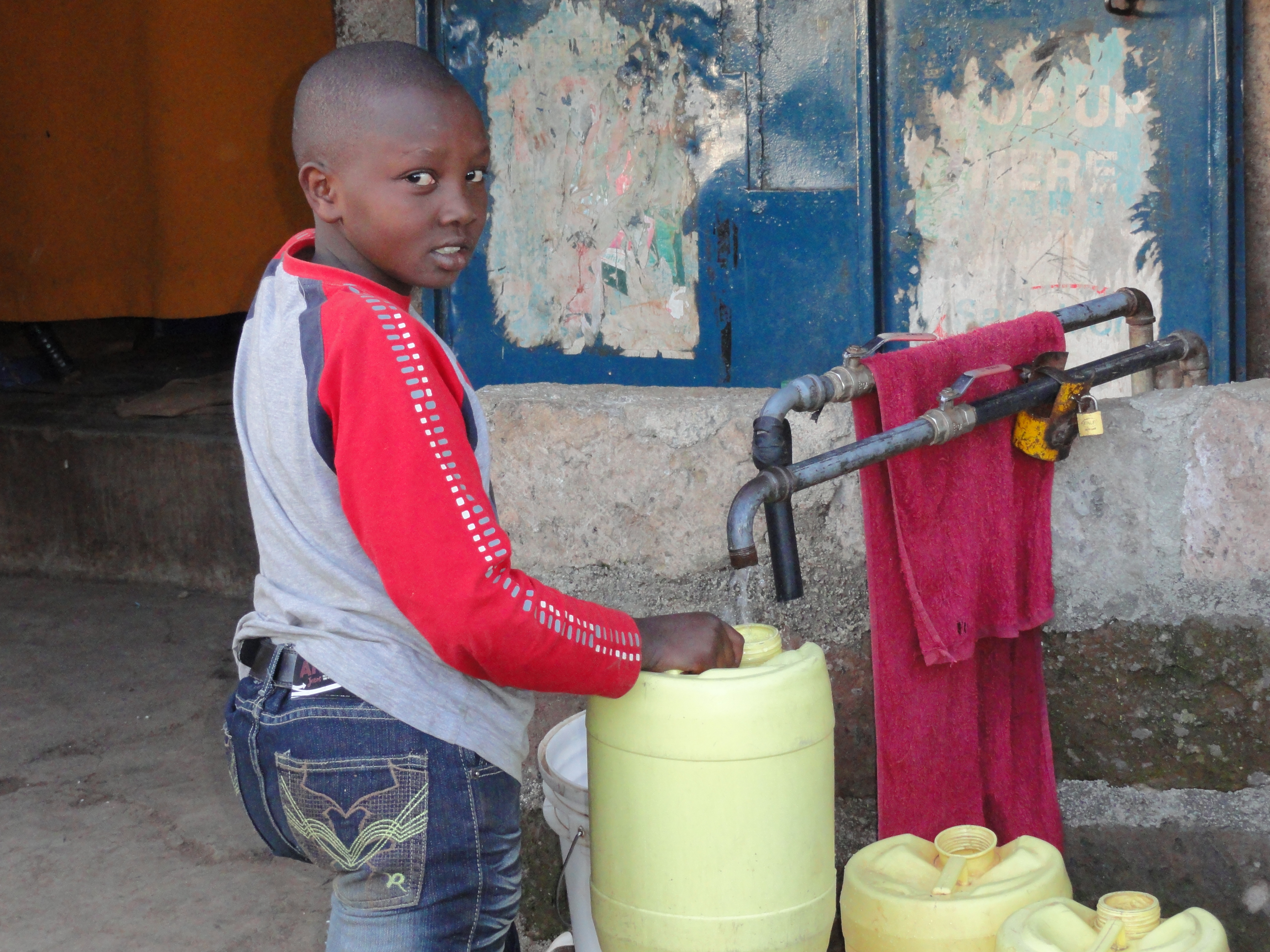
Paying for water at the tap

Paying for water at the tap

We discuss two different options for providing access to clean water with the ceramic water filters, and they were both received very well.  In fact, they told me that if I could bring samples back from Kiminini, they would be able to put me in touch with the leaders of several community groups.  I have little doubt from my research and conversations with the other volunteers that having community leaders promote the filters is one of the best ways to obtain high adoption.  I’ll discuss these options in far greater detail very soon.

We also discussed many of the financial challenges that the residents of Kibera are faced with on a daily basis.  High unemployment is a critical problem, and there are simply too many people for this to be easily resolved.  In addition, the economy is largely internal.  By that I mean that it’s poor people buying and selling to and from each other.  There is little opportunity to inject new capital into the system and fuel economic growth, so their scarce resources just circulate amongst themselves.  There is massive redundancy in terms of the products and services offered and little to no economies of scale.  Identifying opportunities to consolidate and export / sell to higher income areas is worth additional research.  Cash management is also a topic that the locals brought up several times, and that is very consistent with prior research.  I’ll discuss this topic in more detail at a later date as well.
Orphanage

Orphanage

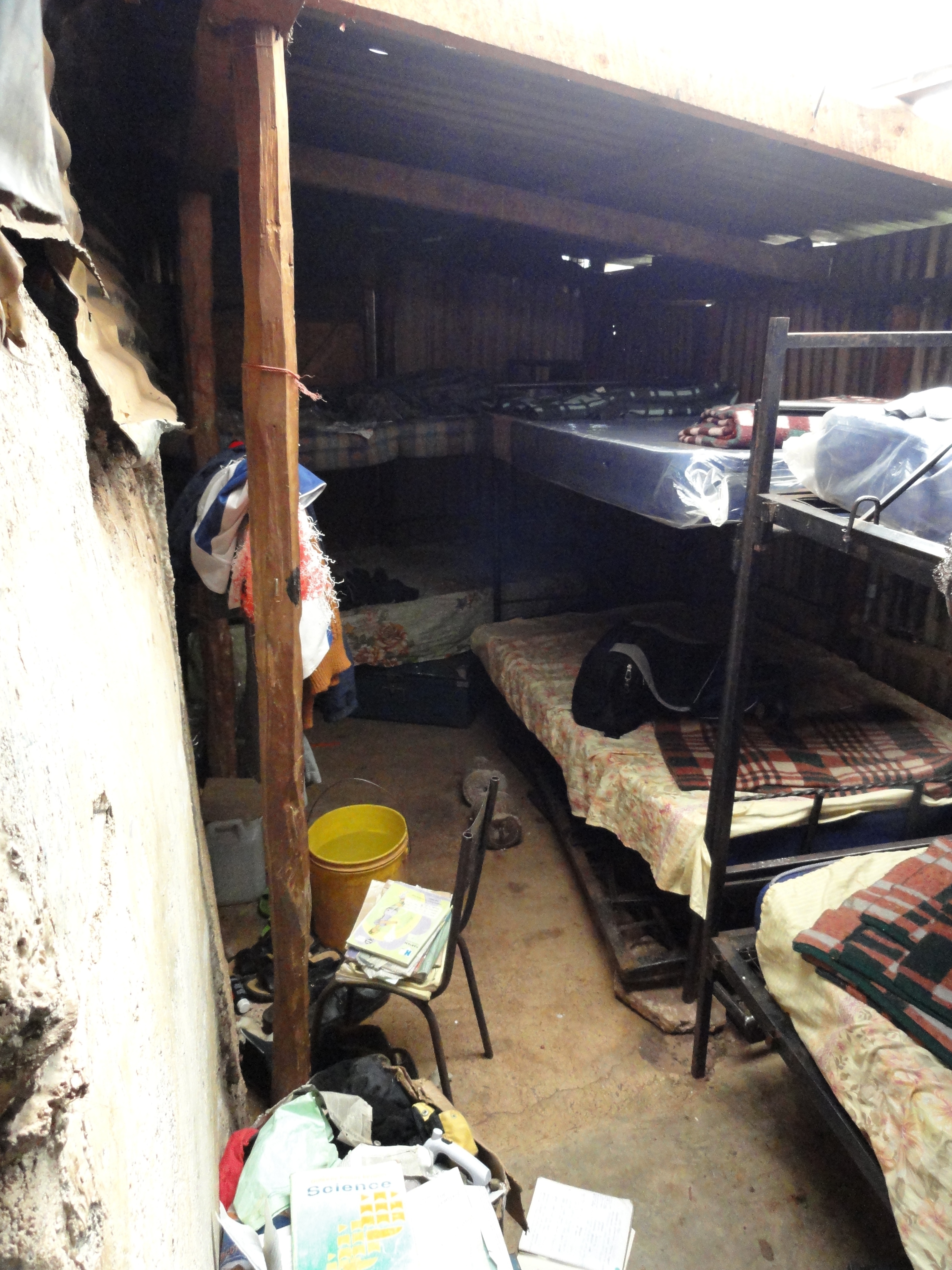
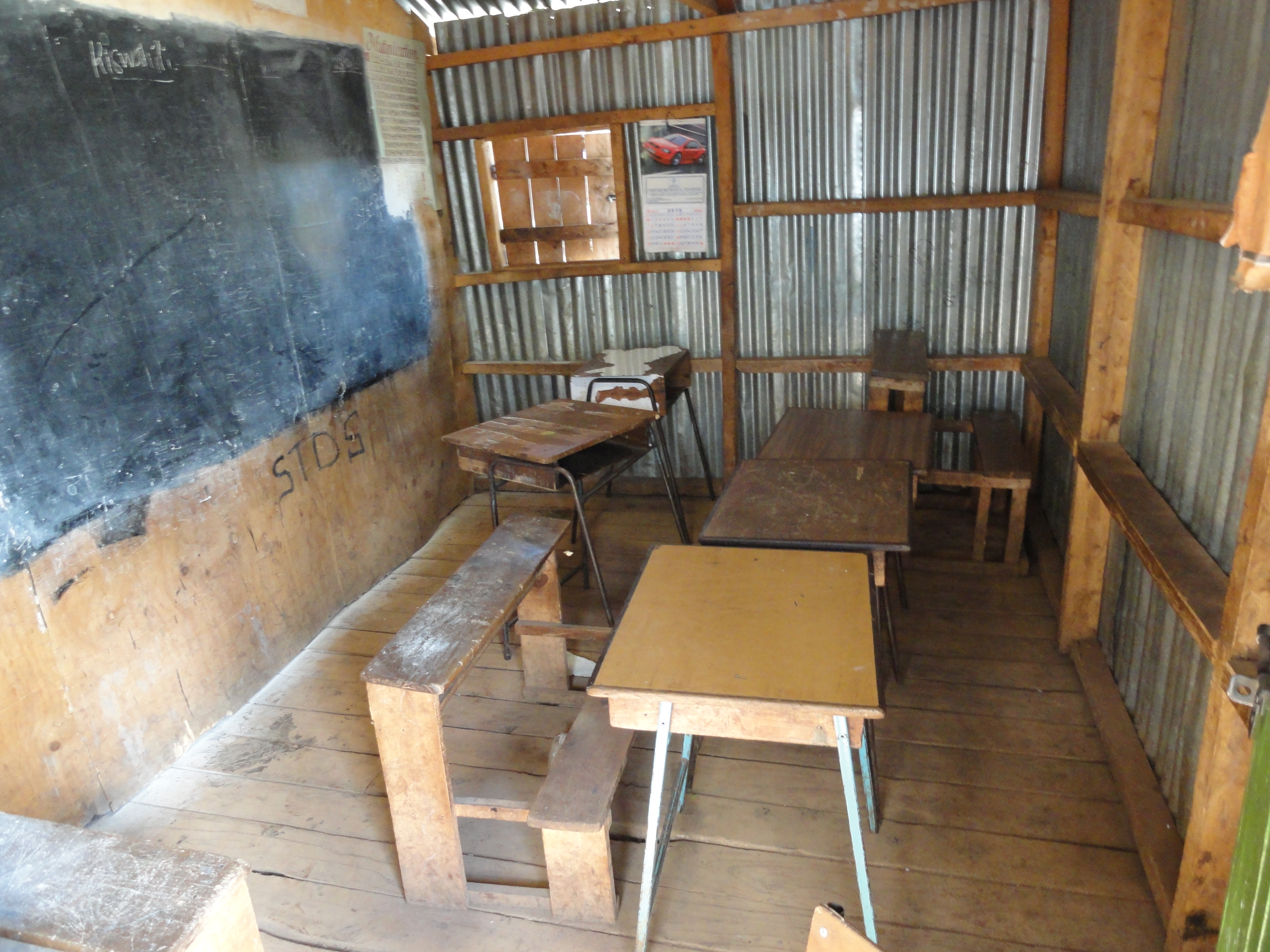
The last two pictures I’ll post here show a privately run orphanage dorm and school, funded primarily through donations.  The dorm was stifling hot when I was in there alone, and the children share 4 to a bed, cramming 64 people into a room I would barely find suitable for storing old junk.  The school consisted of 3 rooms of less than 100 sq. ft. each that accommodate up to 20 children per class.

For additional pictures, check out the Flickr link on the right.  I head to the village of Kiminini tomorrow morning, and will start learning about the similar but distinct challenges faced by the rural poor.  I look forward to sharing more stories and pictures with you.  As always, don’t hesitate to comment if you have thoughts you’d like to share.  Thanks.
School

School

Read Full Post »

I’m happy to say that I’ve arrived safely in Nairobi after a very interesting (and very long) trip.  If I learn nothing else from this experience, I have a feeling that I’m going to realize that all the planning in the world isn’t as useful as being flexible and rolling with the punches (those of you who know me already know those aren’t exactly my biggest strengths).

As I mentioned in the last post, I decided that flying through Europe was too risky right now so I gave up my precious business class seats and took a more complex itinerary so I would be “sure” that the trip would go smoothly.  That lasted all of two hours until I landed in Phoenix and learned that my flight to JFK was delayed an hour due to an oil leak.  Once we finally got near the airport, we spent 20 minutes flying in circles and another 20 minutes waiting for a gate.  By the time I got off the plane, my flight to Cairo was about 20 minutes away from departing.

Carrying a 20 lb. backpack and my computer bag, I took off in a full sprint to get out of terminal 7, onto a train to get me to the international terminal, and then my gate in terminal 4.  When I got to the security checkpoint, literally drenched with sweat, I was told the flight was locked and I’d have to wait until the next day.  After about 5 minutes of begging and pleading, someone from the Egyptian embassy happened to overhear me and came to my rescue.  He somehow convinced them to let me through (I don’t know how, but I wasn’t going to question it).  So I made it on, but sadly my suitcase didn’t have the same luck.  I’m hoping it’s en route and we’ll be reunited tomorrow.

The last interesting piece I’ll mention for now is the layover in Cairo.  I had a 10 hour layover and assumed I was in for a long afternoon, when the Egypt Air transfer desk agent asked if I wanted to go to the hotel.  Confused, I kept trying to explain that my flight was that evening and I didn’t need a hotel.  As it turns out, in Cairo, if you have a long layover, they’ll put you on a shuttle bus to a regular hotel, give you a voucher for lunch and dinner at the hotel restaurant, and check you into a room for the afternoon so you can shower and relax… and it’s all free!  I will say I was disappointed to hear the Egyptian hotel pianist playing Celine Dion, but otherwise it was a pretty amazing experience.

I’m heading into Nairobi now, but I’ve put some other pictures up on Flickr.  So far the internet access is good, but we’ll see how it is when I get to the village.  I’m happy that despite a few bumps, I’ve made it to Kenya without any major problems.  I can’t wait to get to Kiminini so I can get to work.

Read Full Post »

As good a planner as I am, I somehow failed to calculate in the odds of the Yjafjallajokull volcano erupting and causing a massive disruption to global travel when booking my flights several weeks ago… silly me.  So now instead of flying in comfy business class from Seattle to Cairo via Frankfurt before heading to Nairobi, I have the following itinerary (all coach):

April 21:
5:15 am – 8:03 am; Seattle – Phoenix (2.8 hour flight)
8:50 am – 4:59 pm; Phoenix – JFK (5.15 hour flight)
6:30 pm – 11:15 am; JFK – Cairo (10.75 hour flight)
April 22:
9:45 pm – 3:45 am; Cairo – Nairobi (5 hour flight)

After 23.7 hours of actual flight time, it’s only an 8 hour bus ride or 1 hour plane ride from Nairobi to Kitale, where I’ll take a short bus ride to Kiminini.

I’m still extremely excited about this trip, but now I’m really looking forward to day 3!  Stupid volcano.

Read Full Post »

I wanted to share some details about an incredible program called Kick it with Kenya.  One of the biggest challenges to educating people in rural, developing areas on the benefits of safe water is not being able to reach large numbers of people at once.  There are no television commercials, no magazine ads, and very few large organized events.

To get around this problem, we’ve started planning the second “Kick it with Kenya” inter-village soccer tournament.  Soccer is one of the few activities that can draw a crowd, and we have some lofty ambitions.  This year, we’re planning to reach roughly 16,000 people in over 40 villages.  At each of the 40 regional games, we expect over 300 people to come watch.  That presents a perfect opportunity for us to conduct educational seminars about critical health issues like clean water, distribute medicine and conduct HIV testing, and promote and sell water filters.  At the finals in the larger town of Kitale, we expect around 3,000 people to attend!  Opportunities to reach this many people in this region are extremely rare.  Keep in mind that if we can educate one or two people from a household, the benefits will reach the rest of the people in the household.  With an average household size of 8 people, that means we can potentially impact over 100,000 lives with this event.

As you might imagine, this event is not easy to pull off and is certainly not free.  The total cost of the tournament is roughly $13,000, and we have very little time to raise the funds.  If you’d like to help, your donation would be deeply appreciated.  Here are some of the ways your donation could help:

  • $1,500 pays for the total salary, transportation, and promotional materials costs to demo the water filters and provide educational seminars at the 40 soccer games.
  • $800 provides a water filter for each of the 40 teams so the players can drink clean water while they practice and play in the tournament.
  • $350 pays for the promotional materials at the finals, where we expect to reach 3,000 people.
  • $13,000 pays for the entire event – and I’ll buy you dinner at almost any restaurant you choose.  I’m pretty sure a plaque or small statue could also be arranged.

To donate to this amazing program, please visit the following site:

http://www.villagevolunteers.org/donation/donate-info.php

When asked to specify the purpose or sponsored volunteer’s name, enter “Jeremy Farkas – Clean Water Project

All donations are tax deductible and are greatly appreciated.  Thank you so much for your support!

-Jeremy

Read Full Post »

With only about 3 weeks left until departure, the to-do list is fortunately starting to look manageable.  My passport and visa are both ready to go, and I’ve gotten so many vaccinations that I think I’m now immune to bullets and bear attacks (hopefully lion attacks too).  The list of vaccinations includes:

  1. Rabies (3 shot series)
  2. Hepatitis A (2 shot series)
  3. Hepatitis B (3 shot series)
  4. MMR
  5. Typhoid
  6. Yellow Fever
  7. Meningitis
  8. Polio
  9. Tetanus
  10. Flu (regular and H1N1)

In addition to the shots, I also have pills for everything from Malaria to insomnia to Anthrax.

Read Full Post »

My name is Jeremy Farkas and I will be traveling to Kiminini, Kenya from April 21 – June 2 to work on an initiative  promoting broad access to clean water.  I’ll be working with a local organization called Common Ground for Africa.  CGA has developed a plant to create ceramic point-of-use water filters dipped in colloidal silver that removes ~99.9% of harmful bacteria and viruses.  I was introduced to CGA through a fantastic seattle-based non-profit called Village Volunteers.

Read Full Post »

« Newer Posts